
Foundation Inspection
A focused evaluation of visible symptoms, elevation differences, drainage conditions, and other factors that may point to foundation movement.
Serving Plano, Texas & surrounding areas

Plano Foundation Inspection
Get a professional assessment, a clear explanation of the damage, and a repair plan based on your home's structure and soil conditions.
Foundation repair in Plano Texas starts with identifying where movement has occurred and what is causing it. Warning signs may include stair-step cracks in brick, gaps around windows, sticking doors, sloping floors, separated trim, or cracks in interior walls. One symptom alone does not establish the cause, so the structure should be evaluated before repairs are recommended.
Plano's expansive clay soil changes volume as moisture levels rise and fall. During dry North Texas summers, soil can shrink and pull away from the foundation. Wet periods can cause it to swell. Plumbing leaks, drainage patterns, trees, grading, and site conditions may also contribute to movement.
Foundation Repair Plano Texas helps property owners move from visible symptoms to a practical repair scope. The assessment should consider elevations, drainage, structural conditions, and the home's foundation type. If repair is appropriate, the plan should explain the affected areas, proposed support method, access needs, and expected work.

Plano homeowner resources
Understand the inspection, compare written recommendations, and make a better-informed repair decision.
A focused evaluation of visible symptoms, elevation differences, drainage conditions, and other factors that may point to foundation movement.
Learn what to review when comparing contractors, proposed repair methods, written scopes, access requirements, and project expectations.
A practical guide to evaluating local companies based on inspection quality, clear documentation, repair recommendations, and communication.
Professional assessment
Floor elevations and observed damage patterns provide useful evidence. Measurements help show whether movement is concentrated in one area, spread across the structure, or consistent with normal material changes.
Expansive clay, poor grading, concentrated roof runoff, standing water, and extended dry periods can affect soil support. These conditions should be considered alongside structural symptoms rather than treated as separate issues.
Slab and pier-and-beam foundations require different approaches. Depending on the findings, recommendations may involve underpinning, support adjustments, drainage corrections, plumbing evaluation, or monitoring before structural work begins.
A useful proposal identifies repair locations, the proposed support system, site access, expected disruption, and work limits. It should also distinguish structural work from cosmetic repairs that may be completed later.
Lifting and stabilizing are different goals. A repair plan should explain the intended correction, possible cosmetic changes, plumbing considerations, and why doors, drywall, or flooring may need separate attention afterward.

Plano field assessment
Foundation Repair Plano Texas provides foundation repair guidance and service for property owners in Plano, Texas.
The work begins with the structure rather than a preset repair package. Visible cracking, door alignment, floor elevations, foundation type, drainage, and site conditions all help determine whether repair is appropriate and where support may be needed.
Clear communication matters because foundation work affects more than the concrete or crawlspace below a home. Owners need to understand the proposed repair points, access requirements, possible plumbing concerns, and the difference between structural stabilization and later cosmetic work. Foundation Repair Plano Texas focuses on giving customers a clear basis for making that decision.
Planning and pricing
Foundation repair in Plano typically costs about $3,000 to $12,000, while limited stabilization may be lower and extensive underpinning can exceed $20,000. Pier-and-beam work may range from several thousand dollars to $15,000 or more, depending on access and damage.
Final pricing changes with foundation type, movement pattern, number and type of supports, excavation access, drainage work, plumbing concerns, and required cosmetic repairs. These are general local estimates, not a project quote. The exact cost is confirmed after an on-site foundation inspection and written scope.
Inspection-to-solution process
Describe where cracks, sticking doors, floor changes, or exterior gaps have appeared and whether they seem to change after dry or wet weather.
The assessment reviews visible damage, floor elevations, foundation type, grading, drainage, and other site conditions that may explain the movement pattern.
You receive an explanation of the observed conditions, whether monitoring or repair is appropriate, and which parts of the structure may need support.
If repair is recommended, the written scope identifies repair areas, the proposed method, access requirements, and related items that may need separate attention.
The planned work is performed, affected areas are reviewed, and post-repair considerations such as plumbing checks or cosmetic repairs are explained.
Address foundation movement before cracks, alignment problems, or uneven floors become harder to evaluate and repair.
Call for a Free EstimateFoundation Repair Plano Texas works with homeowners across established and newer residential areas of Plano.
Large custom homes, mature trees, varied drainage paths, and expansive lots make careful elevation measurements and site-specific soil observations especially useful here.
Slab-on-grade homes across this broad residential area can be affected by clay soil movement, irrigation patterns, roof runoff, and extended summer dryness.
Dense development and mixed residential construction make grading, drainage routes, neighboring improvements, and access important parts of planning foundation work.
Older homes near downtown Plano may have additions, prior repairs, and varied foundation types that require careful inspection before recommending a repair method.
Mature landscaping and established slab homes make tree influence, irrigation coverage, drainage, and long-term movement patterns relevant during a foundation assessment.
Established properties near Plano's western edge often have mature trees and developed landscaping, so moisture distribution and drainage deserve close review.
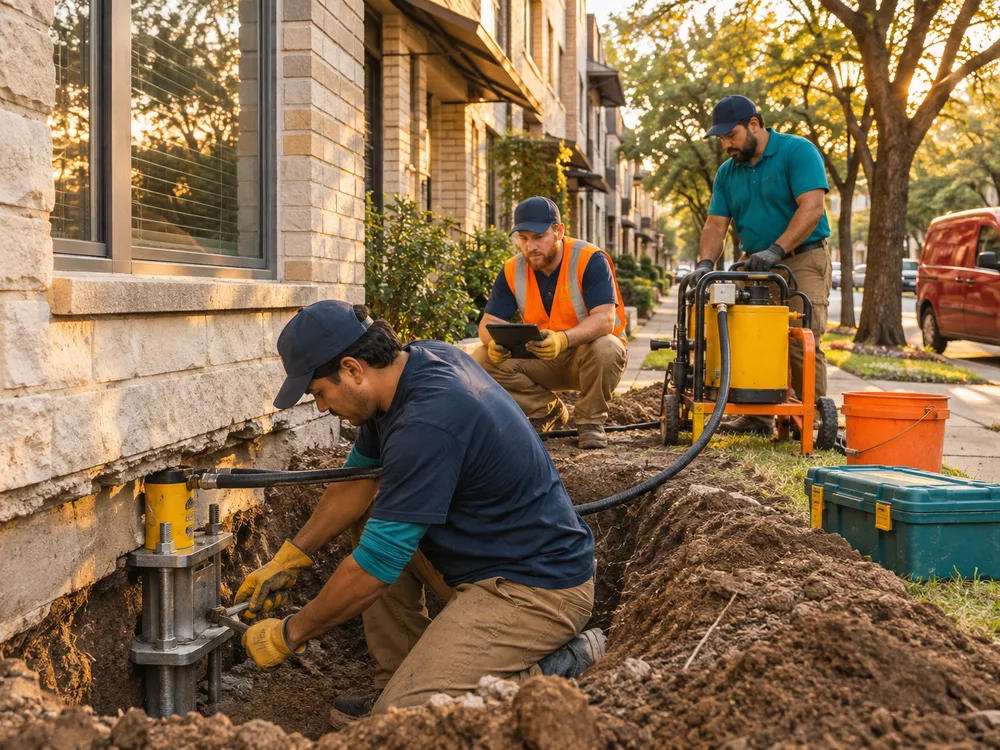
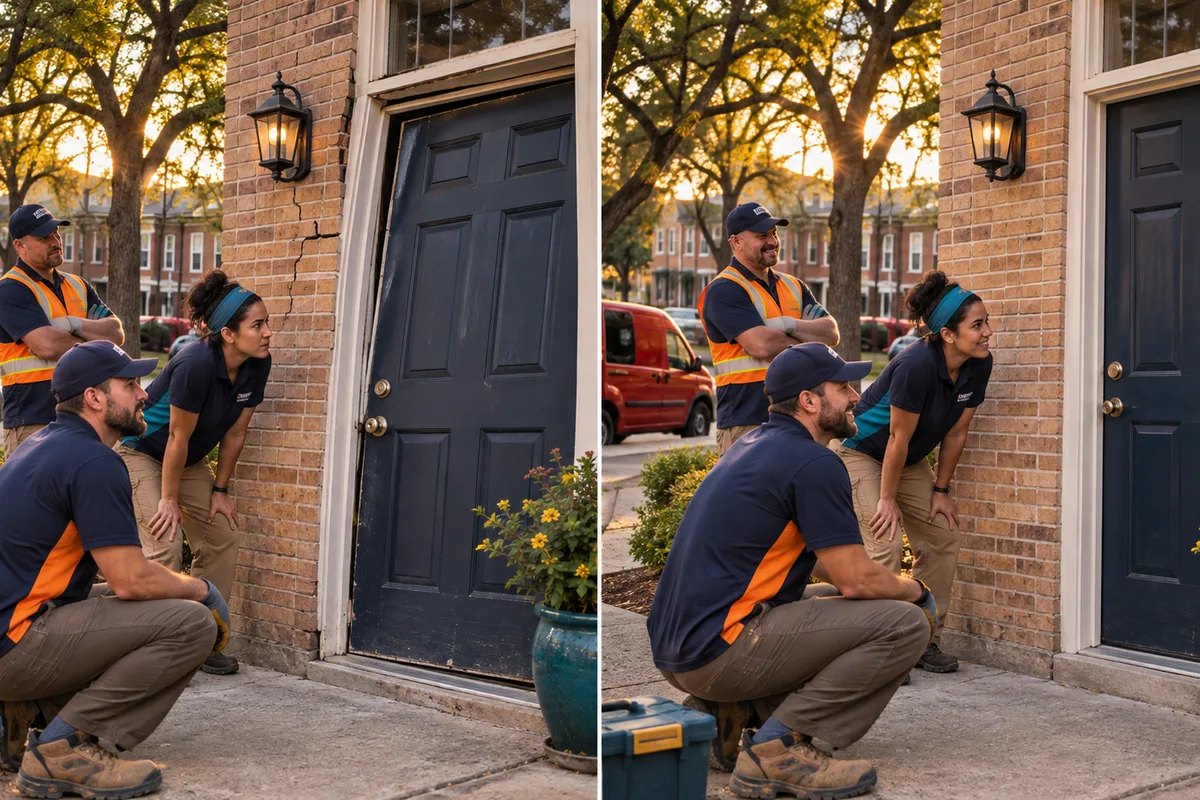
Inspection and repair documentation

Homeowner questions
Scheduling depends on current availability and the time needed for a proper on-site assessment. Mention active changes, recent plumbing issues, property access limits, or a pending real estate decision when requesting an appointment.
Cracks do not automatically mean structural repair is needed. Their location, direction, width, surrounding movement, floor elevations, drainage, and foundation type should be reviewed together before a recommendation is made.
Compare the inspection process, measurements, proposed repair method, written scope, access plan, exclusions, and post-repair expectations. A useful proposal explains why work is recommended and identifies exactly where it will occur.
Foundation adjustment can affect rigid plumbing, tile, drywall, trim, and door alignment. The repair discussion should address existing damage, possible movement during the work, plumbing evaluation, and cosmetic items that are outside the structural scope.
Drainage issues should be identified during the assessment and coordinated with the structural plan. Poor grading, concentrated roof runoff, standing water, and uneven irrigation can change soil moisture around a Plano home's foundation.
The appropriate service depends on the property's foundation type and observed condition. Slab foundations may require underpinning at selected areas, while pier-and-beam systems require evaluation of piers, beams, joists, crawlspace access, and moisture.
Next step
Arrange an on-site assessment to understand the movement, review practical repair options, and receive a scope based on your Plano property.