
Inspection Method
Ask what will be measured and documented. A conclusion should be supported by elevation data, visible distress, structural type, drainage observations, and relevant repair history.
Serving Plano, Texas & surrounding areas
Foundation Repair Companies · Plano, Texas
Get a careful inspection, a written repair scope, and recommendations based on the structure and the cause of movement.
Choosing a Plano contractor
Comparing Plano foundation repair companies starts with the inspection, not the sales pitch. A qualified contractor should document signs of movement, measure floor elevations, examine drainage conditions, and explain whether the findings indicate active movement, prior movement, or a cosmetic issue. Cracks alone do not establish that a foundation needs repair.
Foundation Repair Plano Texas approaches the work as a professional foundation company in Plano by matching recommendations to the building, observed conditions, and repair objective. The written scope should identify proposed support locations, the system to be used, access requirements, expected lifting limits, and work that is excluded. That level of detail makes competing proposals easier to compare.
Plano is within a North Texas region known for expansive clay soils. These soils change volume as moisture conditions change, which can contribute to differential movement beneath slab-on-grade and pier-and-beam structures. Long dry periods followed by heavy rain can intensify moisture differences around a building. Grading, roof runoff, plumbing leaks, nearby vegetation, and soil disturbance can also affect conditions, so a credible inspection considers more than the crack that first caught your attention.
Inspection and diagnosis
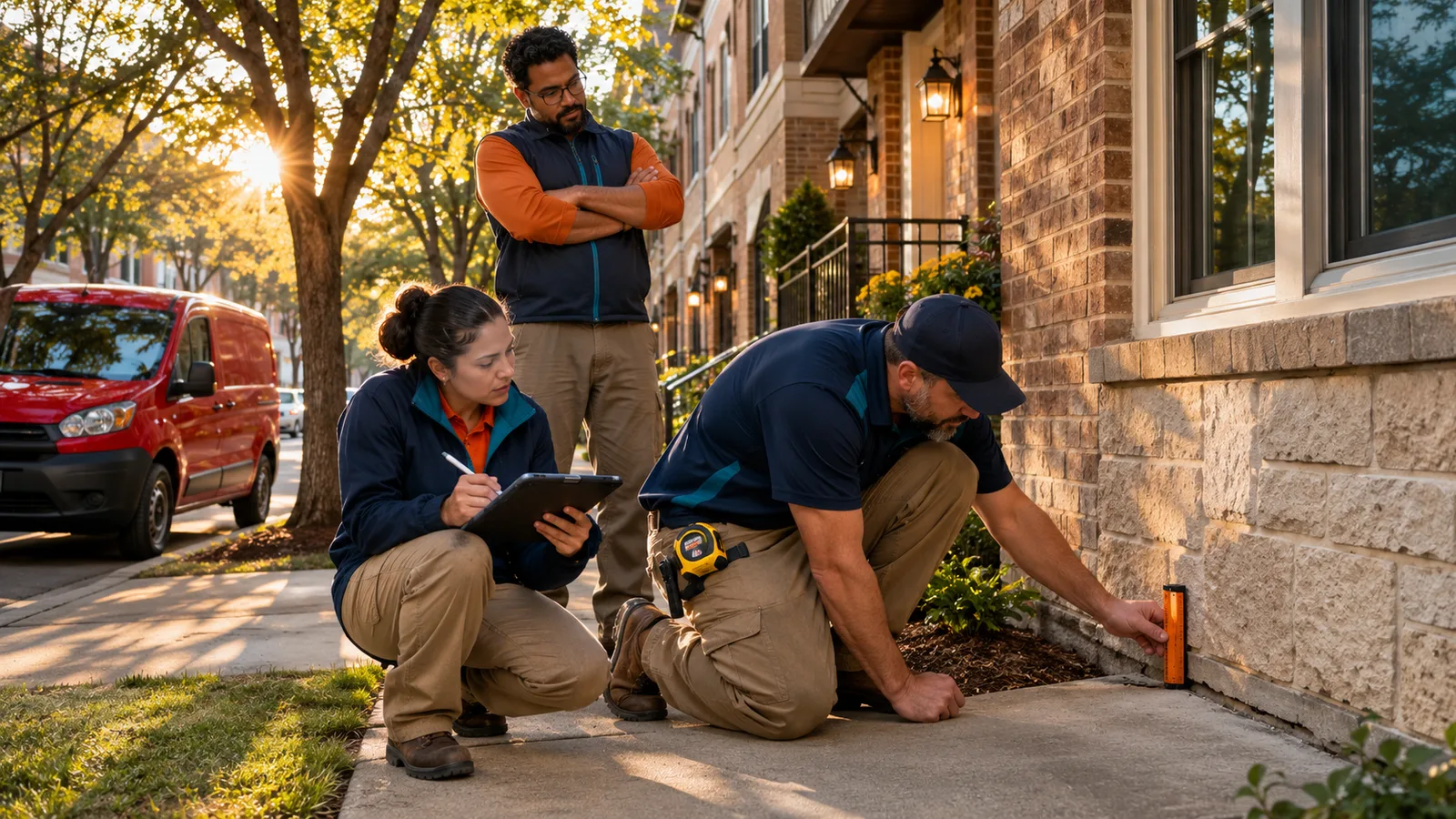
A useful inspection connects visible symptoms with measurements and site conditions. The inspector may record interior floor elevations with a digital level or comparable instrument, then compare those readings with wall cracks, sticking doors, separated trim, uneven floors, exterior brick distress, and gaps around openings. For pier-and-beam buildings, the crawlspace may also be checked for damaged joists, inadequate shimming, deteriorated supports, moisture, or restricted access.
The inspector should examine whether the ground slopes toward the structure, where downspouts discharge, and whether water collects near the foundation. If the movement pattern suggests a possible plumbing problem, testing by an appropriately qualified plumbing professional may be recommended before structural work is finalized. A foundation contractor should not claim that elevation readings alone prove the cause of movement.
Ask for a plain explanation of the reference point used for measurements and how the proposed repair locations correspond to the findings. If the recommendation involves lifting, discuss realistic limits. Raising a settled area may improve elevations and operation of doors or windows, but aggressive lifting can damage finishes, plumbing, or framing. Stabilization is often the primary objective.

Proposal checklist
Ask what will be measured and documented. A conclusion should be supported by elevation data, visible distress, structural type, drainage observations, and relevant repair history.
Concrete pressed pilings, steel push piers, helical piers, drilled piers, and pier-and-beam supports have different installation requirements. The contractor should explain why the specified system fits the structure and soil conditions.
Compare support count and placement, excavation areas, interior access, lifting expectations, cleanup, plumbing-test responsibilities, permit assumptions, and exclusions. A low total can reflect a narrower scope.
Ask whether an independent structural engineer should evaluate the building or prepare repair documents. Engineering review may be appropriate when movement is complex, prior repairs exist, or the project involves significant structural questions.
Read the actual warranty before work begins. Check what is covered, whether adjustments are included, what conditions are excluded, whether transfer is allowed, and what documentation a future claim requires.
Request current proof of insurance and recent references for comparable work. Confirm who will perform the installation, supervise the crew, and address damage or changes discovered during excavation.
Plano property conditions
Plano properties vary widely in age, construction, drainage, landscaping, and repair history. In established areas such as Old Towne Plano, previous additions or earlier structural work can complicate elevation patterns and access. Around Willow Bend, mature landscaping can create pronounced moisture differences close to a foundation, so irrigation practices and large trees deserve attention during the inspection. In Legacy-area commercial properties, occupied spaces, paved access, utility locations, and tenant schedules can influence how repair work is staged.
Those examples do not establish that a particular property has a structural problem. They show why generic recommendations fall short. Two nearby buildings can display similar cracks for different reasons, and they may need different responses. One may benefit from drainage correction and monitoring. Another may require underpinning. A pier-and-beam building could need work on beams, joists, pads, piers, or shims rather than perimeter underpinning.
Local requirements also belong in the planning discussion. The City of Plano administers building permits and inspections within its jurisdiction. Whether a specific foundation project requires permits, engineering documents, plumbing tests, or other approvals depends on its scope and current municipal requirements. The contractor should identify those responsibilities before work starts rather than leaving them unresolved.
Inspection-to-completion process
Share when cracks, uneven floors, or sticking openings appeared, whether they have changed, and whether the property has previous repairs, additions, drainage changes, or known plumbing issues.
The contractor examines the interior, exterior, drainage, and accessible structural areas. Floor elevations and photographs provide a documented basis for the findings.
You receive an explanation of observed movement, likely contributing conditions, and whether repair, monitoring, engineering review, or another investigation is recommended.
The proposal identifies the repair system, support locations, access plan, lifting expectations, restoration limits, schedule assumptions, warranty terms, and price.
The crew installs the specified supports, performs controlled adjustments where appropriate, closes excavations, and provides relevant completion records. Follow-up measurements help document the post-repair condition.
Structure-specific solutions
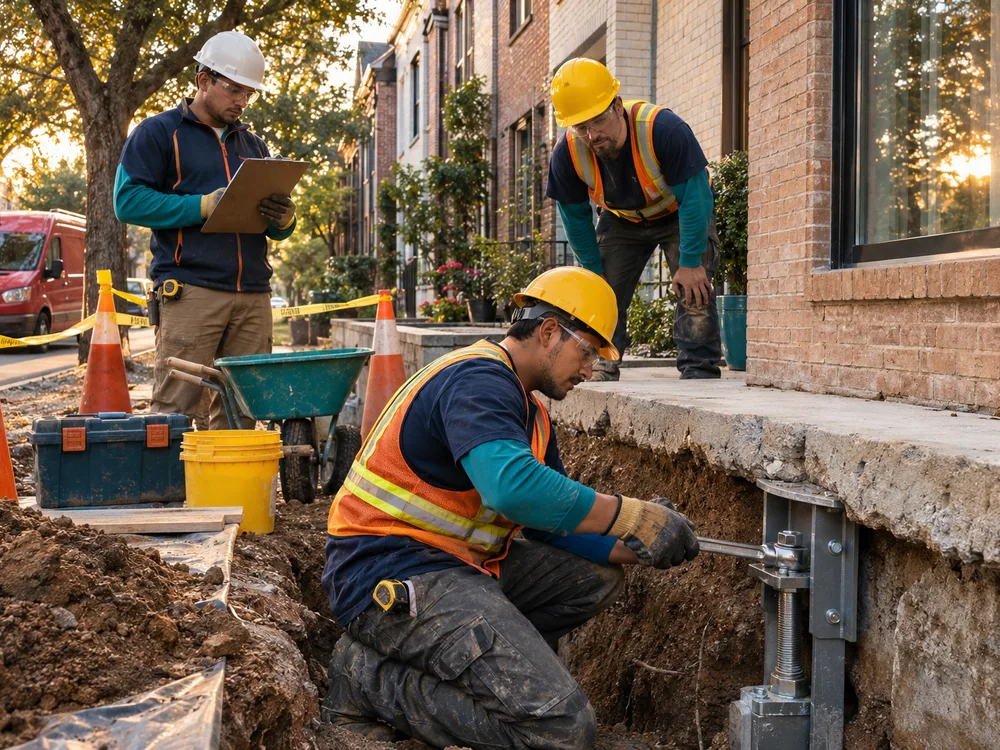
Underpinning transfers support to deeper or more stable material beneath a settled portion of a foundation. Steel push piers are advanced using the building's weight as resistance, while helical piers are rotated into the ground and can be useful where structural load or installation conditions favor that approach. Pressed concrete pilings are also used in North Texas residential work. Product names alone do not determine suitability; design, depth criteria, installation records, access, and building loads matter.
Pier-and-beam repairs are different. The work may involve replacing deteriorated wood, correcting beam support, rebuilding piers, or adjusting shims. Moisture and ventilation conditions in the crawlspace should be addressed when they contribute to deterioration. Foam injection or mudjacking may be appropriate for some nonstructural concrete slabs, such as walkways, but those methods should not be presented as interchangeable with structural underpinning.
A contractor should also explain what happens after stabilization. Masonry and drywall cracks may remain, and doors may need adjustment. Cosmetic repairs are usually best scheduled after the structure has been evaluated and structural work is complete.
Get the structure evaluated before committing to repairs, and ask for findings, assumptions, exclusions, and warranty terms in writing.
Call for a Free EstimateHomeowner questions
Foundation repair can range from a few thousand dollars for limited support work to tens of thousands for extensive underpinning, but an inspection is required for a meaningful price. The final amount depends on the support system, number and depth of piers, interior versus exterior access, excavation, engineering, plumbing tests, structural damage, and restoration. Compare written scopes rather than totals alone because proposals may include different support locations and responsibilities.
Limited residential underpinning may take several working days, while larger or more complex projects can take longer. Weather, access, interior excavation, engineering, municipal inspections, plumbing testing, and discovered conditions can change the schedule. Ask the contractor to separate installation time from permit review, testing, finish repairs, and any return visit.
An independent structural engineer is worth considering when the movement is complex, the building has prior repairs, proposals conflict, or major structural work is recommended. Plano projects may also require documents or inspections based on their scope and current City of Plano rules. Ask whether the engineer is independent of the repair sale and whether the contractor will follow a sealed repair plan when one is provided.
The timing depends on the movement pattern and proposed repair, but tests may be recommended both before and after adjustment. A pre-repair test can identify an existing leak that may be contributing to soil moisture or require planning. A post-repair test can check whether plumbing was affected during lifting. The contractor and qualified plumbing professional should define the test type and responsibility in writing.
Foundation repair cannot promise that every crack will close or every floor will become perfectly level. The primary goal is usually to stabilize affected areas, with controlled lifting attempted only when conditions permit. Framing, masonry, finishes, cabinets, and plumbing respond differently to movement. Ask for realistic adjustment limits and wait until structural work is complete before making cosmetic repairs.
A warranty should state the covered repair locations, covered work, adjustment terms, exclusions, transfer rules, claim process, and any owner maintenance requirements. Review whether movement outside the repaired area, plumbing leaks, drainage problems, additions, or soil changes are excluded. A transferable warranty may help a future sale, but its value depends on the written terms and the company remaining available to honor it.
Arrange an inspection promptly if cracks are changing, floors feel increasingly uneven, doors stop operating properly, or visible separation appears around walls and openings. Sudden movement, a suspected water or gas line problem, or an immediate safety concern calls for faster action by the appropriate qualified professional. Photograph changes and note dates so the inspector has a clearer history.
Next step
Describe the symptoms, repair history, and property type. Foundation Repair Plano Texas can evaluate the conditions and provide a written plan for the next step.